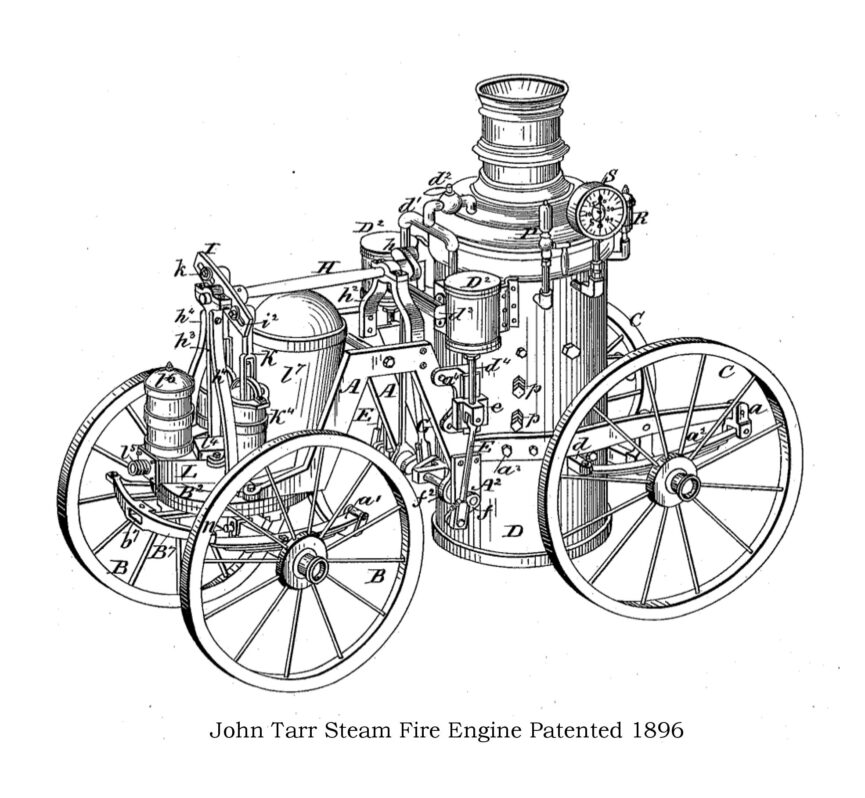
When most people think of patent drawings, they picture hand-drawn illustrations from the late 1800s through the early 1900s. Famous drawings include Thomas Edison’s light bulb patent or Alexander Graham Bell’s telephone patent. And while those historic graphics evoke a certain nostalgic feel, the requirements for patent drawings today are very different.
For inventors filing with the United States Patent and Trademark Office (USPTO), understanding patent drawings, and how they’ve evolved over the years, can make the difference between a notice of allowance and costly delays.
The Role of Patent Drawings
Patent drawings are not merely decorative. They function as working documents—technical plans that define an invention alongside the written specification. When prepared correctly, drawings do not repeat the text. They reinforce it.
Some aspects of an invention are simply easier to show than to explain. Mechanical relationships, internal components, and system architecture often become immediately clear once illustrated. A well-prepared drawing can communicate in seconds what might take paragraphs to describe.
Drawings also present the invention from multiple perspectives—top, side, sectional, and exploded views—allowing the invention to be understood as a complete system. For patent examiners, courts, investors, and potential licensees, drawings often provide the quickest and clearest understanding of what has been invented.
Because of their importance, the United States Patent and Trademark Office can object to or reject a patent application if required drawings are missing, unclear, or inconsistent with the written specification.
Old Patent Illustrations: Artistically Intriguing, but Limited
Patent drawings from the nineteenth and early twentieth centuries carry a distinct appeal. Many were hand-drafted with careful linework, deliberate shading, and an almost architectural feel. They reflect a time when drafting was a hands-on discipline, practiced at a drafting table with pencils, straightedges, and patience.
That era of drafting has a lasting influence. Learning to draw by hand—working through line weight, perspective, and spatial relationships—builds an appreciation for precision that never really goes away. It also makes old patent drawings especially enjoyable to study, not just for what they show, but for how they were made.
At the same time, those historic drawings were created before uniform technical standards existed. Inventors and draftsmen used different conventions, levels of detail, and visual styles, making consistency difficult. Artistic shading and decorative flourishes, while visually appealing, often reduced technical clarity.
Reproduction added another limitation. Before digital tools, drawings were copied mechanically, and each generation lost detail. By modern USPTO standards, many historic patent drawings—despite their craftsmanship—would not meet today’s formal requirements.
Modern Patent Drawings: Precision Over Artistry
Modern patent drawings favor discipline over decoration. The USPTO imposes detailed requirements governing how drawings must appear, beginning with a strong preference for black-and-white line art. Shading is permitted only when necessary to convey surface contours or depth.
Line quality is critical. Consistent line weights ensure that features remain legible through scanning, reproduction, and examination. Every element shown must be labeled with reference numerals that match the written description exactly. This alignment is not cosmetic—it is essential.
Standardized views are expected as well. Perspective views, sectional cuts, cutaway diagrams, and exploded assemblies are used to communicate structure and function efficiently. Color and gray tones are generally prohibited unless specifically approved. As a result, most modern patent drawings are created using CAD or specialized drafting software, with clarity and compliance as the guiding principles.
Why Professional Drawings Matter
The USPTO does not require patent drawings to be prepared by a professional illustrator, but quality has real consequences. Drawings that fail to meet USPTO standards often lead to examiner objections, corrective filings, and unnecessary delays.
Those issues increase cost and slow prosecution. Clear, compliant drawings do the opposite. They reduce friction during examination and keep the focus where it belongs—on the invention itself.
Strong drawings also matter beyond the USPTO. Investors, partners, and potential licensees often rely on drawings to understand an invention quickly. Well-prepared drawings signal technical credibility and help communicate the scope and value of the intellectual property.
We Can Help
Patent drawings have evolved significantly from the hand-drafted illustrations of the past. While those historic drawings remain admired for their craftsmanship, modern patent drawings are technical documents governed by strict rules and precise standards.
For inventors in Las Vegas and across the United States, working with an experienced patent attorney helps ensure that drawings support the application rather than delay it. At The Thornton Firm, we help inventors prepare strong patent applications and coordinate with professional patent illustrators to produce drawings that meet USPTO requirements—combining modern precision with an appreciation for the drafting traditions that shaped patent practice.