Inventors often spend most of their time thinking about how an invention works. They focus on the problem it solves, the components involved, and the technical details that make it different from what came before. That instinct makes sense. But in patent law, an invention does not become enforceable property until it is defined by patent claims.
Patent claims are the part of a patent application that ultimately matter the most. They are not marketing language. They are not explanations. Claims are legal boundary lines. When a patent is examined, licensed, challenged, or litigated, everything revolves around the claims.
To understand how claims work, it helps to place them in context with the written description and enablement requirements that come earlier in the application.
From Discovery to Ownership
In earlier articles, I used Nevada’s mining history as an analogy. The written description requirement being where the inventor stakes a claim. The application must show that the inventor possessed the invention at the time of filing, not just as a vague idea, but as a real and concrete technical solution. The enablement requirement goes a step further. It requires the inventor to explain how to reach and mine the ore, so that someone skilled in the field could make and use the invention without undue experimentation.
Together, written description and enablement establish that the invention is real, understood, and accessible. But none of that, by itself, creates ownership.
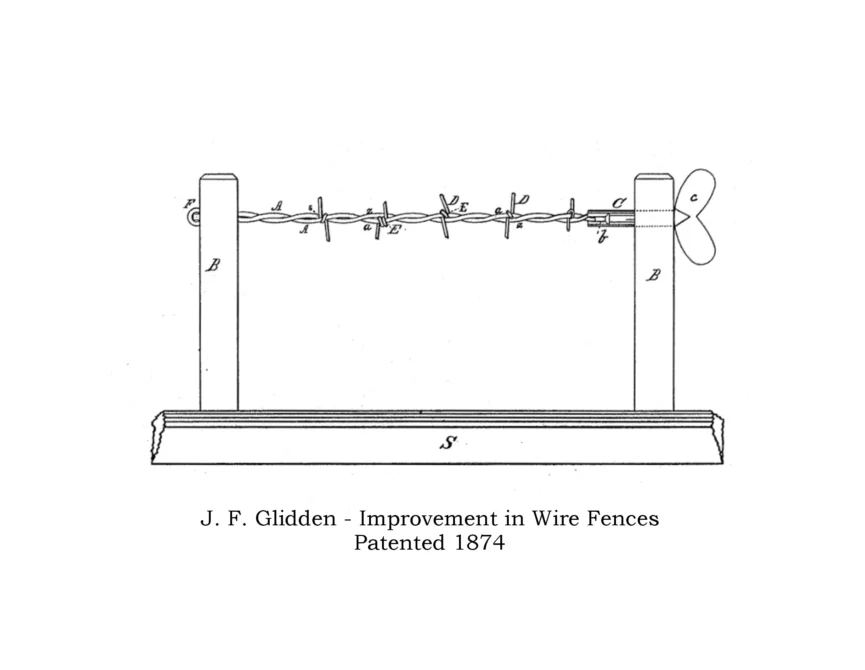
Patent claims are where ownership is ultimately decided. Think of patent claims as a fence around your property.
Claims are where the inventor decides which portion of the disclosed invention is being claimed as exclusive property. In mining terms, the land has been surveyed and staked, but the inventor still has to put up a fence. Until that happens, the discovery remains exposed.
Claims Must Be Supported by the Written Description
A patent claim cannot reach beyond what the written description actually supports. An inventor cannot describe a narrow implementation and then claim a much broader concept without adequate disclosure. The written description sets the outer boundary of what may be claimed.
This relationship is not theoretical. During examination, patent examiners routinely reject claims that are broader than the disclosure allows. Courts do the same when claims are challenged after issuance. If the specification does not show that the inventor possessed the full scope of what is being claimed, the claim fails.
That is why careful drafting of the written description is not just about getting past the filing stage. It directly affects how much territory the claims can lawfully cover.
Every Claim Must Be Fully Enabled
Support alone is not enough. Each claim must also be fully enabled across its entire scope.
If a claim covers multiple variations, configurations, or operating conditions, the specification must teach how to make and use the invention for all of them, not just a preferred example. A claim that reads broadly but is only enabled for a narrow embodiment is vulnerable.
This is another place where inventors sometimes get tripped up. A claim may look reasonable on paper, but if it sweeps in implementations that the disclosure does not actually teach, the claim may be invalid. Enablement is not about whether the inventor personally built every version. It is about whether the patent teaches others how to do so.
In mining terms, it is not enough to mark a large claim area if the maps only show a workable path to a small corner of it.
Claims Must Be Definite
Patent claims must also be definite. They must particularly point out and distinctively claim the invention. That means they must clearly inform others where the boundary lies. Ambiguous or subjective language creates uncertainty, and uncertainty undermines enforceability.
Courts do not tolerate guesswork when it comes to patent boundaries. A claim must tell competitors, with reasonable clarity, what falls inside the protected territory and what remains outside. If the boundary cannot be understood, the claim is invalid no matter how innovative the underlying idea may be.
This is why patent claims often read differently from ordinary technical writing. Precision matters more than elegance. Every word is chosen because it affects how the boundary is drawn.
Claims Are What Get Litigated
At the end of the day, patent claims are not just examined. They are enforced.
When infringement is alleged, courts do not decide the case by reading the abstract or admiring the drawings. They construe the claims and compare them to the accused product or process. If every element of a claim is present, infringement may exist. If even one element is missing, it does not.
Licensing negotiations follow the same logic. The value of a patent depends on how broadly and clearly the claims read on real-world products. A patent with weak or narrow claims may look impressive but offer little leverage.
In mining terms, disputes are not resolved by how much land was surveyed or how promising the geology looked. They are resolved by where the stakes were placed.
Putting It All Together
The written description and enablement requirements establish that an inventor has truly made a discovery and shared it with the public in exchange for limited exclusivity. Patent claims define the scope of that exclusivity.
Claims must be supported by the written description, enabled across their full scope, and drafted with sufficient definiteness to mark clear boundaries. When those requirements are met, claims transform an invention from an idea into enforceable property.
For inventors, this is the key takeaway: Describing an invention is not the same as protecting it. Protection lives in the claims, and claims only stand strong when they are firmly rooted in what the inventor actually disclosed and enabled.
That is where patent value is created—and where it is ultimately tested.