Many independent inventors believe an invention must be completely different from anything that came before it in order to qualify for patent protection. That is not how the patent system works. Many patents protect improvements to existing products, systems, and methods. In fact, much of American innovation occurs through refinement rather than complete reinvention.
Inventors improve existing technology every day. A safer drug, a better locking mechanism, a more efficient manufacturing process, or a more reliable software system may all support patent protection under the right circumstances.
The existence of earlier technology does not automatically prevent patentability. In many cases, the important question is whether the inventor developed a new and nonobvious improvement over what already exists.
Most Inventions Build Upon Existing Technology
Very few inventions emerge from a vacuum. Most inventors improve products that already exist in some form. An inventor may create a more durable machine, a more efficient computing solution, or a safer consumer product. Even relatively small refinements can become valuable inventions when they solve real-world problems.
Modern technology evolves through continuous improvement. Automobiles, smartphones, medical devices, manufacturing systems, and software platforms all develop through countless incremental innovations. Many of those innovations receive patent protection.
Independent inventors often become discouraged after discovering similar products online. However, the presence of prior art does not automatically defeat patentability. Many patented inventions improve technology that already existed in the marketplace.
Thomas Edison And The History Of Improvement Patents
Thomas Edison remains one of the most recognized inventors in American history. However, many people overlook an important aspect of his work. Edison did not simply invent entirely new technologies from scratch. Much of his success came from improving his existing systems and continuously refining products after they entered the marketplace.
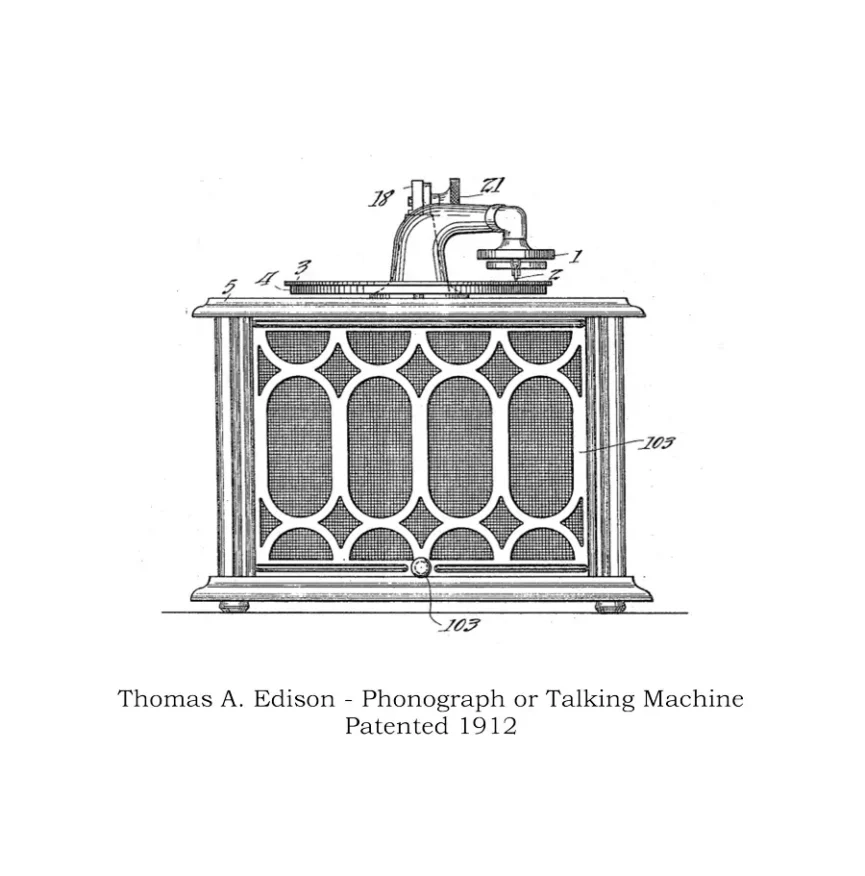
The phonograph provides a good example. Edison obtained numerous patents relating to the phonograph, but innovation in sound recording technology did not stop with his original machine. He and other inventors spent decades improving recording quality, playback reliability, materials, amplification systems, and commercial usability. Many of those refinements became the subject of additional patents.
The same pattern appeared throughout Edison’s work. Electrical lighting systems, power distribution equipment, recording devices, and industrial machinery all evolved through continuous improvement. The American patent system encouraged that process by allowing inventors to protect new and useful improvements to existing technology.
That principle remains part of United States patent law today. Under 35 U.S.C. § 101, an inventor may obtain a patent for “any new and useful process, machine, manufacture, or composition of matter, or any new and useful improvement thereof.” Congress expressly recognized that innovation often occurs through refinement rather than complete reinvention.
Patentability Requires More Than Novelty Alone
United States patent law imposes several requirements for patentability. Two of the most important involve novelty and nonobviousness.
Novelty generally requires that the claimed invention has not already appeared in a single prior art reference under 35 U.S.C. § 102. Nonobviousness, governed by 35 U.S.C. § 103, asks a different question. Even if an invention is technically new, the USPTO may reject the claims if the differences between the invention and the prior art would have been obvious to a person having ordinary skill in the relevant field.
This distinction matters because many patentable inventions involve combinations, refinements, or improvements to existing products. A product does not need to be entirely unknown to humanity in order to qualify for patent protection. Instead, the claimed improvement itself must satisfy the requirements of patent law.
Many Valuable Patents Protect Narrow Improvements
Independent inventors sometimes assume a patent must dominate an entire industry in order to have value. In reality, many commercially successful patents protect relatively narrow improvements to existing products.
An improved connector, a better dispensing system, a safer medical device, or a more efficient computer processing method may support valuable patent rights even if the broader product category already exists. In many industries, products become covered by layers of improvement patents developed over many years.
Patent claims play an important role in this process. The claims define the legal boundaries of the invention. A seemingly modest refinement may become extremely important when carefully described and properly claimed during patent prosecution.
Prior Art Does Not Automatically Defeat Patentability
Inventors often perform internet searches and immediately conclude that their invention cannot be patented after finding similar products online. Patentability analysis rarely works that way.
The USPTO evaluates prior art in a detailed and technical manner. Patent examiners may combine multiple references when asserting obviousness rejections under Section 103. At the same time, relatively small structural differences, functional improvements, or unexpected advantages may support patentability depending on the technology involved.
Context matters. Claim language matters. The way an invention solves a problem may matter. Even modest changes can become significant when evaluated as part of a complete patentability analysis.
For this reason, inventors should avoid assuming that an existing product automatically prevents patent protection.
Innovation Often Occurs Through Refinement
The American patent system encourages technological advancement in many forms, including incremental improvement. Some inventions introduce entirely new concepts. Others improve the reliability, efficiency, safety, or usability of existing technology. Both forms of innovation contribute meaningfully to technological progress.
Here in Las Vegas, gaming technology has changed dramatically over the years through refinements in electronic systems, security features, user interfaces, ticketing systems, player tracking technology, and networked gaming platforms. Many of those developments involved improvements to existing systems rather than entirely new inventions.
Independent inventors should not underestimate the value of refinement. Many important inventions began as improvements to products already on the market. In some cases, those improvements became more commercially important than the original invention itself.
Understanding this distinction helps inventors evaluate their ideas more realistically and make better decisions regarding patent protection.