One of the most common questions inventors ask is whether they can patent an idea.
The answer is usually no. Every invention starts with an idea, but the patent system protects inventions, not ideas.
That distinction is important. Many people use the terms “idea” and “invention” interchangeably. Patent law does not. An idea is often the beginning of the inventive process. An invention is a developed solution to a problem.
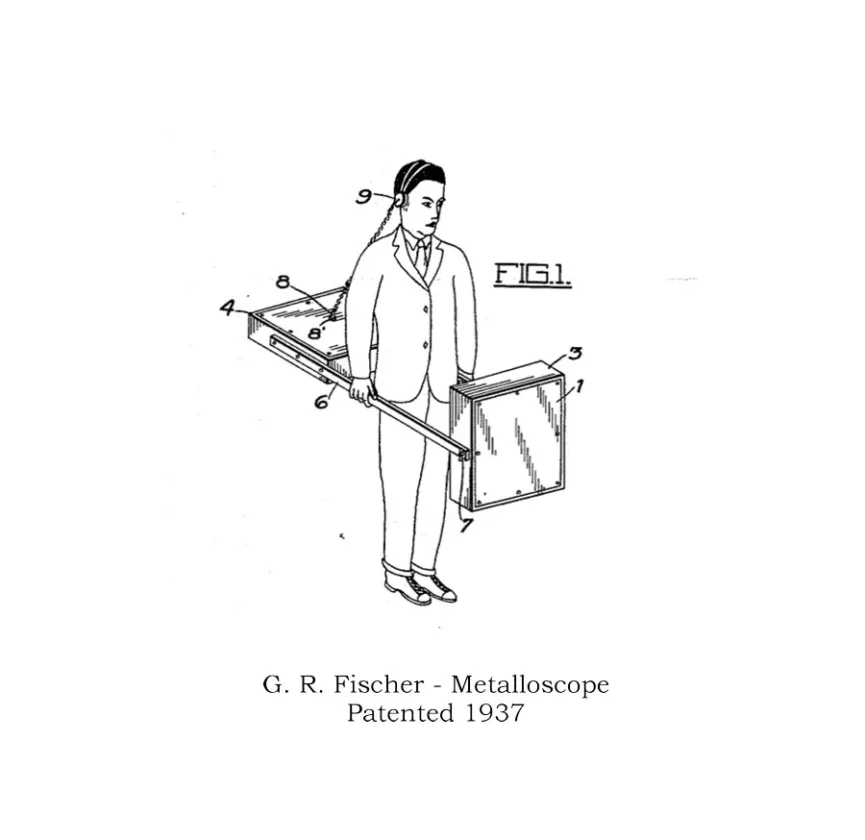
A simple prospecting analogy helps explain the difference. Imagine a prospector and his metal detector searching for gold in the Nevada desert. One day, he discovers signs that gold may be present. He finds a few flakes in a dry stream bed or spots a promising rock formation. At that point, he may have discovered something valuable, but he does not yet know how much gold exists or where the boundaries of the deposit lie. Inventing often follows the same path.
Every Invention Starts With an Idea
Every patented invention started as an idea. A new product begins as a concept. A new machine begins as a sketch. A new process begins as a solution to a problem. The idea starts the journey, but it is only the first step.
A person may want to create a safer ladder. Another person may want to develop a more efficient engine. Someone else may want to build a faster computer. Those ideas identify problems worth solving, but they do not yet explain how the solution works.
The patent system generally requires more. An inventor must move beyond the concept stage and begin defining the invention itself. The inventor must determine how the invention operates, what components it uses, and what features make it different from existing technology.
As those details emerge, an idea begins to develop into an invention.
The Patent System Rewards Disclosure
After finding signs of gold, a prospector does not immediately stake a valuable claim. Instead, he studies the area and gathers information. He determines whether a valuable deposit actually exists and where it begins and ends.
Inventors must do something similar. A patent application filed with the USPTO should explain how an invention works. It should describe the components of the invention and how those components interact. It should provide enough information so that others can understand the invention.
This requirement exists because the patent system rewards disclosure. In exchange for a limited period of exclusivity, inventors share their knowledge with the public. Patent applications therefore contain detailed descriptions and drawings rather than broad statements of goals or aspirations.
Written Description Requires More Than an Idea
The written description requirement is one of the clearest examples of why ideas alone are generally not patentable.
A patent application should demonstrate that the inventor actually possessed the invention at the time of filing. In other words, the inventor should be able to describe what has been invented. The application should identify the important features of the invention and explain how those features work together.
Returning to the prospecting analogy, finding signs of gold is not the same as identifying a valuable deposit. The prospector must gather evidence and determine what has actually been discovered. Inventors face a similar challenge. A person who merely identifies a problem may have a promising idea, but that person has not necessarily developed an invention.
This is often where inventors begin preparing sketches, diagrams, and drawings. A drawing forces an inventor to think about the structure of a device, the steps of a process, or the interaction of different components. Many inventors discover that the act of drawing an invention helps transform a general concept into a defined solution.
As the details become clearer, the invention itself becomes clearer. What begins as an idea gradually develops into something that can be described, understood, and potentially protected.
Enablement Requires a Practical Solution
Patent law also requires enablement. A patent application should teach others how to make and use the invention without undue experimentation.
The enablement requirement prevents inventors from claiming results without explaining how those results are achieved. A patent application should do more than identify a problem. It should explain a solution.
An inventor cannot simply state a desire for a faster computer, a safer vehicle, or a more efficient manufacturing process. Instead, the inventor should explain how the invention achieves those improvements. The application should provide enough information so that a person having ordinary skill in the art can understand the invention and put it into practice.
A good idea may start the process, but enablement requires the inventor to go much further.
Patentable Subject Matter Matters
Even a well-developed invention must fall within the boundaries of patentable subject matter.
United States patent law generally protects useful processes, machines, manufactures, and compositions of matter, as well as improvements to those categories. Not every idea falls within those categories.
For example, abstract ideas, laws of nature, and natural phenomena generally are not patentable by themselves. The focus should remain on practical applications rather than concepts standing alone.
Inventors often achieve the best results by concentrating on how an invention works, what it does, and how it improves existing technology. Practical solutions generally receive far more attention from the patent system than broad statements of desired results.
Not Every Idea Becomes a Patent
Not every promising discovery leads to a valuable mining claim. A prospector may spend weeks exploring an area only to discover that the deposit is too small or that someone else found it first.
Inventors face similar challenges. An invention must be useful. It must be new. It must also be sufficiently different from what already exists.
This is where prior art becomes important. A patent search may reveal that someone else already developed the same solution years earlier. In that situation, an inventor may need to improve the concept or pursue a different approach.
Not every idea becomes a patent. That does not mean the effort was wasted. The inventor may simply need to continue developing the invention.
What About Provisional Patent Applications?
A provisional patent application can serve as a useful bridge between an idea and a fully developed invention.
Many inventors begin with a concept that is still evolving. They may have sketches, notes, drawings, or an early prototype. They understand the general direction of the invention, but they continue refining the details. In these situations, a provisional patent application may provide an opportunity to document the invention while development continues.
However, inventors should not assume that a provisional application can protect a mere idea. The same basic principles still apply. A strong provisional application should describe the invention in meaningful detail. It should explain how the invention works and identify the features that make it unique.
Returning to the prospecting analogy, a provisional application is often similar to staking an early claim after discovering promising signs of gold. The prospector may not know everything about the deposit, but enough information exists to justify marking the location and continuing the investigation. Likewise, a well-prepared provisional application can help inventors preserve their work while they continue developing and refining the invention.
For many independent inventors, a provisional patent application serves as an important step between an initial idea and a nonprovisional patent application. The key is remembering that the provisional application should disclose an invention, not merely a concept.
Many Patents Cover Improvements
Many inventors believe they must create something entirely new to obtain a patent.
That is not true. Some of the most valuable patents protect improvements to existing products, systems, and methods. An inventor who improves a medical device, a manufacturing process, a consumer product, or a gaming technology may be able to obtain patent protection if the improvement satisfies the legal requirements.
Innovation often occurs one step at a time. Many successful inventions begin with a simple question: How can I make this better?
Final Thoughts
A good idea is like finding signs of gold. It may point to something valuable, but it is only the beginning.
The United States patent system does not protect mere concepts. It protects inventions.
To move from an idea to a patentable invention, an inventor must develop the details, understand how the invention works, and describe it with sufficient clarity. The inventors who succeed are the ones who continue prospecting until they discover exactly what they have found.