Every invention starts with an idea. You recognize a problem, imagine a better way to do something, or see an opportunity that others have overlooked. But how much development does that idea need before you can file a patent application?
You do not necessarily need a finished product. But you do need to understand your invention well enough to explain what it is and how it works. Knowing the difference can help you focus your research, avoid premature filing, and recognize when to seek professional guidance.
Can You Get a Patent on an Idea?
The question “Can you patent an idea?” often arises early in the inventive process. An idea can lead to a patentable invention, but identifying a problem or describing a desired result does not, by itself, provide enough substance for patent protection.
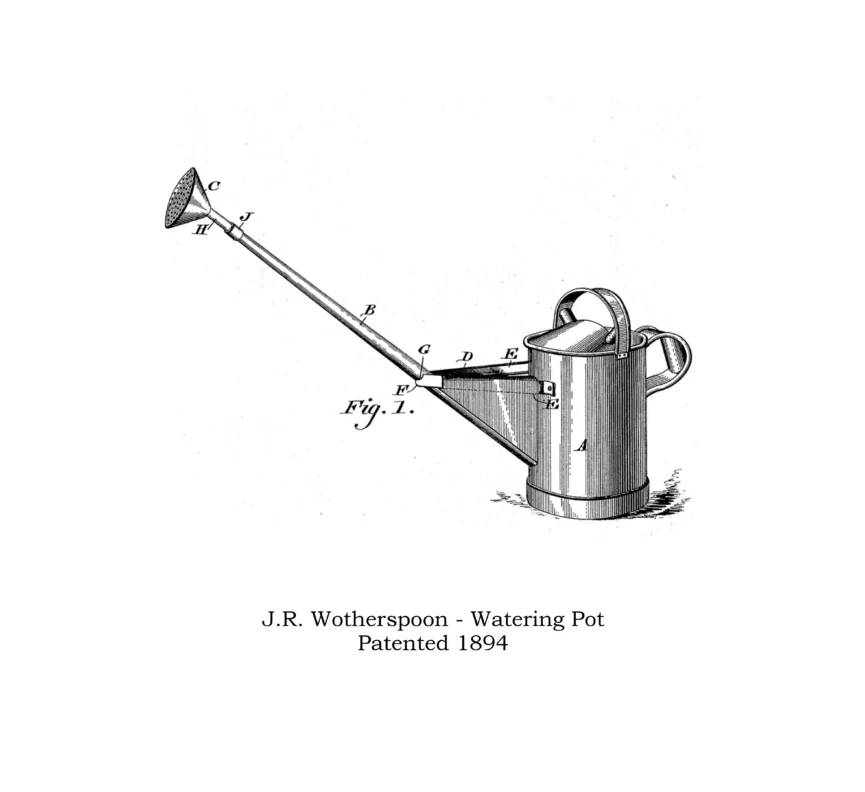
Consider a watering can that has a spout which spans longer distances than normal watering cans. That describes a useful goal. But it does not yet explain how the watering can is assembled, controls water flow, or maintains its structure.
As you develop a specific arrangement that explains how the watering can is made and functions, you begin moving from a desired result to an invention. The important question becomes whether you can describe that arrangement in sufficient detail.
What Does It Mean to “Possess” an Invention?
The written description requirement requires your patent application to reasonably convey to someone with ordinary skill in the relevant field that you possessed the claimed invention when you filed.
“Possession” does not mean you must hold a finished product in your hands. It means the application must show that you had worked out the invention you seek to claim. A statement that you intend to develop a solution later does not establish possession of that solution today.
The application should identify the relevant structures, components, steps, or other technical features and explain their relationships. What detail you need depends on the technology and the scope of protection you seek.
That scope matters because patent claims define the boundaries of protection. Your application must support the invention those claims describe.
Can Someone Else Make and Use Your Invention?
Your application must also satisfy the enablement requirement. It must teach a person with ordinary skill in the field how to make and use the claimed invention without undue experimentation.
That person can bring ordinary technical knowledge to the task. You do not need to explain every familiar tool or conventional manufacturing technique. Some experimentation may also be reasonable. But the application must provide enough instruction across the scope of the claimed invention.
For the watering can, naming a container and a spout may leave important questions unanswered. What kind of materials are needed? What supports such a long spout? How does one carry the watering device? Your description should explain the relationships that make the solution work.
Do You Need a Prototype Before Filing?
You do not necessarily need a prototype. The USPTO ordinarily does not require a working model, and a sufficiently complete description and drawings can support a patent application.
A prototype can nevertheless help you determine whether you understand the invention as well as you think. Building and testing may reveal that a component cannot perform its intended function, that a connection needs a different arrangement, or that the invention requires an additional step.
The need for testing depends partly on the technology. A straightforward mechanical arrangement may require less experimental support than an unpredictable chemical or biological invention. If you remain uncertain whether the central solution works, further development may help resolve that uncertainty before filing.
Where Should You Start?
Begin by recording your solution in a private document. A useful inventor’s notebook captures sketches, experiments, design changes, and unanswered questions. It helps organize your work, although it does not replace a patent application or establish a patent filing date.
Describe the problem, then explain how your invention solves it. Identify the components and show how they connect. For a process, describe the steps, their order, and the conditions under which they occur.
Use drawings where they clarify the explanation. You can begin with rough sketches. The purpose is to communicate the invention, and carefully prepared patent drawings can later help support the application.
Record alternatives you have actually considered. Explain which features the invention needs and which details could change. This material helps form a thorough invention disclosure for the patent professional assisting you.
How Can You Recognize Missing Details?
A watering can is a simple example. Today’s complex electronics and software applications require greater attention to detail.
Watch for explanations that skip the hardest part.
“Some kind of sensor will handle that” may signal an unresolved question about detection. “The software will figure it out” may leave the actual processing unexplained. “A special material will prevent overheating” may identify a research goal without identifying a workable material or arrangement.
Ask what information enters the system, what happens to it, and what causes the intended result. Follow the operation from beginning to end.
You do not need to resolve every routine engineering choice. But if your explanation leaves someone else to discover the central technical solution, your idea likely needs more development.
How Should You Research Existing Technology?
Research existing solutions while you develop your own. Understanding what counts as prior art helps you look beyond competing products. Relevant information may appear in patents, published patent applications, technical papers, manuals, websites, or other sources.
Search using several descriptions of the problem, function, and components. Someone else may use different terminology for similar technology.
When you find a relevant patent document, read the detailed description and study the drawings. The title and abstract may omit the feature that matters most. Follow references to related documents and explore classifications associated with similar technology. Include foreign patent publications and non-patent literature in your research.
Keep copies of useful references and note how your invention differs. A preliminary search can inform your decisions, but it cannot guarantee that you have found every relevant disclosure.
Does Similar Technology Mean You Should Stop?
Finding similar technology does not automatically end the inquiry. Many patents cover improvements to existing products and technology.
Ask what the earlier reference teaches and what your invention changes. Does your arrangement operate differently? Does it solve a problem the earlier technology leaves unresolved? Can you explain the technical reason for the improvement?
Finding nothing identical does not guarantee patentability either. The basic requirements for a patent include eligibility, usefulness, novelty, and nonobviousness.
Novelty generally asks whether a single qualifying prior art reference already discloses the claimed invention. Nonobviousness addresses whether the differences from prior art would have been obvious to someone with ordinary skill in the field.
A developed invention and a patentable invention are related concepts, but they raise different questions.
Can a Provisional Application Protect an Unfinished Idea?
A provisional application can serve as an initial filing while development continues. It cannot supply technical details you have not yet worked out or disclosed.
Although a provisional application does not require formal claims, it needs an adequate written description and any drawings necessary to understand the invention. A later claim receives the benefit of the provisional filing date only if that earlier application adequately supports it.
A strong provisional application therefore deserves careful preparation. A brief statement of your goal may obtain a filing receipt while providing little support for the claims you eventually want.
A provisional application does not become a patent by itself. You generally must file a corresponding nonprovisional application within twelve months to preserve its benefit.
How Do Disclosure and Sales Affect Timing?
Before publicly demonstrating the invention, posting technical details online, launching a crowdfunding campaign, or offering it for sale, discuss filing with a patent professional.
Certain inventor disclosures may fall within a one-year U.S. grace period, but the circumstances and exceptions matter. Disclosure before filing can also jeopardize foreign patent rights. Do not assume you can disclose now and safely address the patent later.
Waiting also carries risks. Another inventor’s earlier application may affect your ability to obtain a patent. Understanding first-to-file rules and patentability helps explain why both timing and an adequate disclosure matter.
When Is It Time to File?
You may be ready when you can describe a specific solution, explain how someone skilled in the field can make and use it, and identify the features you believe distinguish it from existing technology.
You do not need to perfect the commercial product or settle every manufacturing choice. You do need enough technical substance to support the invention you seek to claim.
A patent attorney or patent agent can help assess that readiness before you complete development. Bring your sketches, technical explanation, test results, unresolved questions, and the closest references you found. Also identify any planned disclosures, demonstrations, or sales activity that may affect timing.
If your idea still needs work, keep developing it. Research may reveal a better approach. A sketch may expose a missing connection. An experiment may answer the question that has held you back. Each step can help you understand your invention more clearly and make a better decision about when to file.