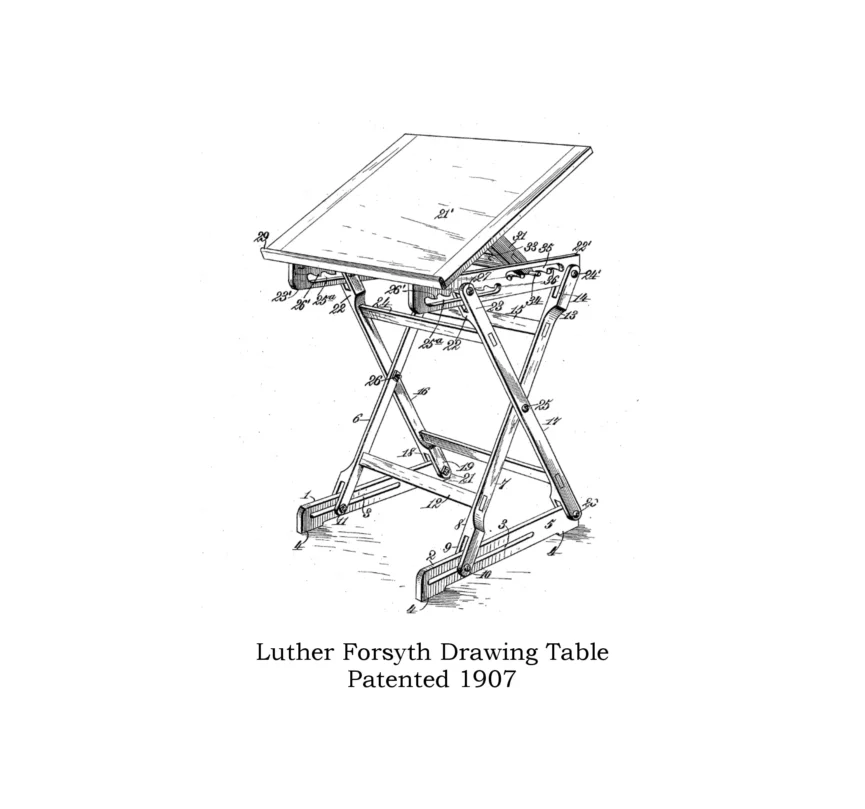
Patent drawings sit at the intersection of law, engineering, and technical writing. They translate an idea into something a patent examiner or juror can quickly understand, and they often determine how broadly—or narrowly—an invention receives protection. While many inventors still think of drawings as mechanical sketches, modern patent practice tells a broader story. Today’s drawings explain physical structures, system architecture, and even software logic. Understanding how each type of drawing functions is essential to preparing a strong application.
I entered the world of patent law with an old-school drafting background long before computer-aided design became standard. I spent years in high school and college drafting classes, working at angled drafting desks with T-squares, triangles, vellum paper, and mechanical pencils. Every line required intention, and you planned before you drew because revisions were slow and mistakes were costly. That experience still shapes how I think about patent drawings today. I appreciate the patent drawings of earlier times even though the tools have changed dramatically.
Modern drawing tools make it far easier to produce clean, consistent figures, but the underlying purpose remains the same. Drawings exist to communicate how an invention works. For mechanical inventions, that communication happens through views, sections, and reference numerals. For computer-implemented inventions, drawings often take the form of flowcharts and block diagrams. For electronics, schematic drawings may become critical to proper disclosure.
Flowcharts, Block Diagrams, and Schematics in Modern Practice
When an invention involves software, algorithms, or computer-implemented processes, flowcharts often become one of the most important drawing types in the application. A flowchart expresses the logic of an invention in a way that words alone cannot. It shows how data moves, how decisions occur, and how steps relate to one another over time. Examiners frequently rely on flowcharts to understand what a claimed method actually does, particularly when claims reference conditional logic, sequencing, or automated decision-making.
Block diagrams serve a different but equally important role. Rather than showing step-by-step logic, block diagrams describe system architecture. They illustrate how components interact, how modules communicate, and where functionality resides within a larger system. For distributed systems, networked devices, or cloud-based implementations, a well-constructed block diagram often provides the clearest explanation of the invention as a whole.
For inventions involving electronics or hardware-level innovation, schematic drawings may be required to adequately describe the invention. Schematics show circuit relationships, signal paths, and component interconnections that cannot be captured meaningfully in prose. While not every electronics-related invention requires schematics, they become essential when the novelty lies in circuit architecture, signal routing, or electrical interaction between components.
The key point is that modern patent drawings extend far beyond traditional mechanical figures. They capture logic, structure, and interaction. When prepared thoughtfully, they provide the technical backbone that supports both the written description and the claims.
Drawings in Provisional Utility Patent Applications
Provisional applications allow flexibility in form, but they do not excuse incomplete disclosure. Drawings in a provisional application often determine whether the filing actually preserves priority for later claims. Flowcharts, block diagrams, and system drawings can be just as important here as mechanical figures, especially for software-driven inventions.
These drawings do not need to comply with formal USPTO requirements. They do need to clearly explain how the invention works. Modern tools make it easy to create understandable diagrams that communicate logic and architecture without professional-grade polish. The emphasis at this stage should be completeness and clarity, not formatting perfection.
Inventors should expect to devote serious thought to these drawings. A provisional application that includes clean drawings, clear flowcharts and system diagrams often provides far stronger long-term protection than one that relies solely on text.
Drawings in Nonprovisional Utility Patent Applications
Nonprovisional utility applications demand precision. At this stage, drawings must comply with USPTO formatting rules and must align carefully with the claims and specification. Flowcharts and block diagrams become especially important in computer-implemented inventions, where claim language often maps directly onto illustrated logic or system components.
Modern drafting software makes compliance easier than ever, but strategic judgment still matters. Drawings should anticipate how an examiner will interpret the claims and should remove ambiguity rather than create it. Well-prepared figures often reduce the need for lengthy explanations during prosecution and help avoid misinterpretation of functional claim language.
This stage typically requires a greater investment of time, not because the invention has changed, but because the drawings must now support enforceable claims. The payoff is a clearer application and a smoother examination process.
Drawings in Design Patent Applications
Design patent drawings remain a category unto themselves. Unlike utility patents, where drawings explain the invention, design patent drawings define it. Every visible line, curve, and surface contributes to the scope of protection. Flowcharts and block diagrams have no role here, but precision and consistency matter more than anywhere else.
Modern illustration tools allow extraordinary control over line quality and perspective, but the legal decisions embedded in these drawings still require careful thought. What appears solid, what appears broken, and what is omitted entirely all carry legal meaning.
Why Drawings Still Matter—Even More Than Before
Having worked with both manual drafting tools and modern digital systems, I can say this with confidence: The technical barrier to creating quality patent drawings has never been lower. What is still required is understanding how those drawings function legally.
Whether expressed as mechanical figures, flowcharts, block diagrams, or schematics, drawings serve as a critical form of disclosure. They explain the invention to the examiner, anchor the claims, and strengthen the patent long after it issues. Drawings are integral to satisfying both the written description and enablement requirements of Section 112. When inventors treat drawings as a core part of their strategy rather than a procedural requirement, the entire application benefits.
You no longer need drafting desks, vellum, or T-squares to prepare patent drawings. You do need clarity, planning, and an appreciation for how different types of drawings communicate different aspects of an invention. When those elements come together, patent drawings become one of the most powerful tools in the application—not the most intimidating.