Inventors tend to focus on describing how their invention works. They explain the components, the structure, and the intended use. That is necessary, but it is not enough. Most inventors have never heard the phrase “secondary considerations,” and even those who have tend to underestimate it. The term sounds like an afterthought, something optional or minor, but in patent law it carries real weight.
At some point, the United States Patent and Trademark Office will pick apart your invention. In addition to being novel, the examiner will want to know whether your invention would have been obvious in view of what already exists. That inquiry falls under 35 U.S.C. §103, and it is where many applications begin to struggle.
One mistake inventors make is not technical. It is rather strategic. Inventors focus on an invention’s novelty. They focus on written description and enablement. But inventors often leave out the very information that can help overcome an obviousness rejection later on.
Under Graham v. John Deere Co., the obviousness analysis does not stop with prior art. It also evaluates secondary considerations–real-world evidence showing how the invention fits into a broader industrial context. Such evidence often starts with the invention disclosure itself.
If you capture the right details early, you give your patent application a much stronger foundation.
A Long Felt Need
Every patent solves a problem. But not every problem carries weight in a patent application. What often matters is whether the problem persisted over time.
If your invention addresses an issue that others recognized but could not solve, that is important. It suggests that the solution was not obvious, even to skilled professionals in the field.
An effective invention disclosure does more than describe the solution. It explains the history of the problem. It shows that the issue was known, that it affected real users, and that prior approaches failed to resolve it.
That kind of context matters when the USPTO evaluates obviousness.
Failure By Others
A good disclosure also captures what others tried to do before your invention came along.
When prior efforts exist but fail to fully solve the problem, they help define the boundary between what was obvious and what was not. These attempts might appear in earlier patents, academic research, or commercial products that never quite delivered.
Even well-funded efforts can fall into this category. If others tried and failed, the eventual solution may not have been obvious after all.
Including this information in an invention disclosure helps preserve that narrative from the start.
Copying By Others
Sometimes the strongest evidence emerges after an invention enters the world.
If competitors begin adopting similar designs or approaches, that is not random. It reflects recognition that the solution works. This kind of industry response can support an argument that the invention was not obvious before it appeared.
An inventor cannot always predict this at the time of filing, but it is still worth documenting as it develops. Keeping track of competing products, licensing interest, or industry attention can become valuable evidence later in the process.
Evidence Of Commercial Success
Commercial success can strengthen a patent application, but only when it ties directly to the invention itself.
It is not enough for a product to sell well. The success must come from the features described in the patent claims. If customers adopt the product because of those features, that connection becomes meaningful.
An invention disclosure can lay the groundwork for this argument by identifying what makes the invention valuable to users. It should explain not just how the invention works, but why people would choose it over existing alternatives.
That connection becomes critical if the invention gains traction in the market.
Unexpected Results
Some inventions succeed because they achieve results that go beyond what anyone anticipated.
When an invention performs better than expected, or in a way that contradicts conventional thinking, it challenges the idea that the solution was obvious. These outcomes can include improved efficiency, better reliability, or performance gains that prior art does not suggest.
Inventors often overlook this point because they become accustomed to their own design. What feels intuitive in hindsight may not have been predictable at the outset.
An effective disclosure captures these unexpected results early, while they are still clear and measurable.
Thomas Edison and Real World Examples
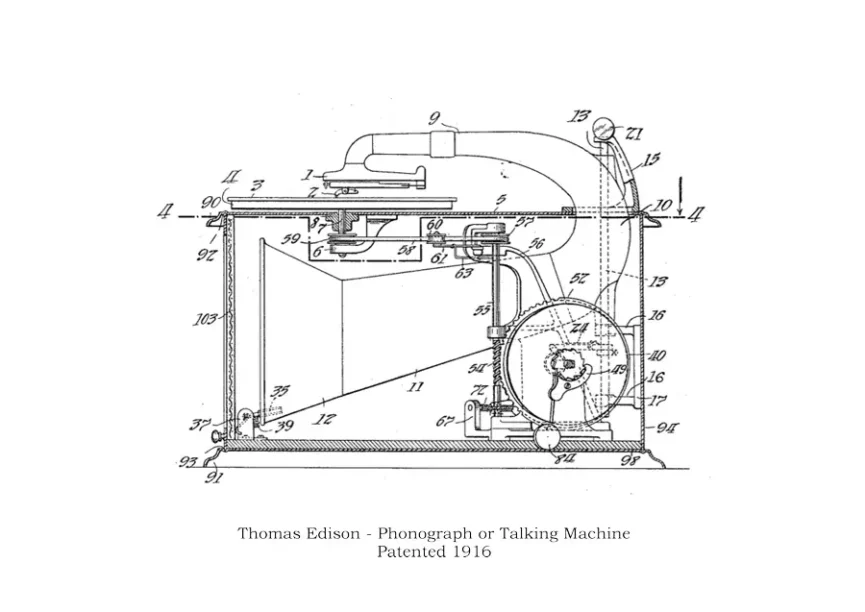
The evolution of Thomas Edison’s phonographs are a good example of what we now describe as secondary considerations. His original invention addressed a problem that had lingered beneath the surface for years–how to capture human speech or music in a permanent medium. His improvements to his invention addressed problems he and others encountered along the way.
When Edison’s phonograph emerged, it was not met with casual indifference. It triggered immediate fascination, widespread success, and rapid improvements. Those kind of reactions are exactly what modern patent law looks for when evaluating obviousness and secondary considerations. They reflect solutions that people did not expect, but immediately recognized as valuable.
In case you were wondering, Edison was awarded 200 patents related to the phonograph during his lifetime.
Build the Record Before You Need It
An invention disclosure is more than a technical description. It is your first opportunity to explain why your invention matters.
Take the time to include secondary considerations. Document known problems. Include prior failed approaches. Describe early results. Provide industry context. When you include such metrics, you give your patent application a significant advantage. You are not waiting to react to a USPTO rejection. You are preparing for it.
That preparation can make the difference between a patent application that stalls at the USPTO and one that moves forward.
It’s not a matter of if the USPTO will question whether your invention is obvious. It’s only a matter of when. The answer to this inquiry should already be in the record.