If you have ever read a patent, you probably noticed that claims came across as awkward, repetitive, and unnatural. Words repeat. Sentences run long. The structure feels rigid. Your high school English teacher would probably wonder how a patent practitioner ever got into college.
But patent claims are not the result of bad grammar or poor prose. They do not aim to sound good. They do not aim to evoke powerful emotions. Claims are used for the sole purpose of defining ownership.
Think of Patent Claims Like a Mining Property
I have enjoyed using Nevada’s mining history as an analogy for patent drafting. The written description requirement is where the inventor stakes a claim. The application must show that the inventor possessed the invention at the time of filing, not just as a vague idea, but as a real and concrete technical solution. The enablement requirement goes a step further. It requires the inventor to explain how to reach and mine the ore, so that someone skilled in the field could make and use the invention without undue experimentation.
Together, written description and enablement establish that the invention is real, understood, and accessible. But none of that, by itself, creates ownership.
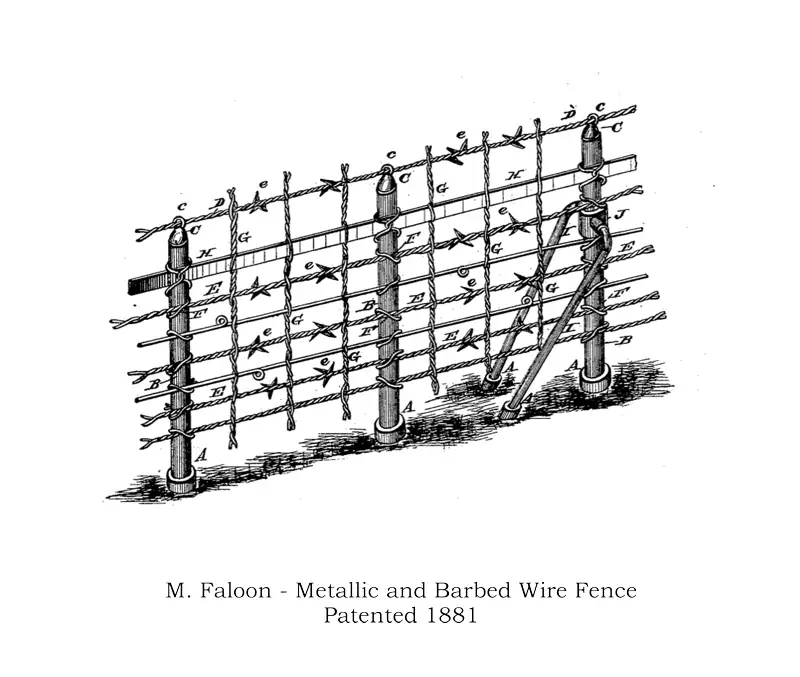
Patent claims are where ownership is ultimately decided. Think of patent claims as a fence around your property.
Claims are where the inventor decides which portion of the disclosed invention is being claimed as exclusive property. In mining terms, the land has been surveyed and staked, but the inventor still has to put up a fence. Until that happens, the discovery remains exposed.
Patent Claims Follow Rules of Law, Not Grammar
Patent claims follow legal rules, not the Chicago Manual of Style.
Claims repeat terms on purpose. If a claim introduces “a housing,” it continues to refer to “the housing” or “said housing.” Switching to a synonym creates ambiguity. Precision controls scope.
Claims also use a single-sentence structure. That format ties every element to one legal definition and avoids unintended gaps. Claims run several independent clauses into a single sentence.
Patent examiners at the United States Patent and Trademark Office do not grade grammar. They evaluate whether the claims clearly define the invention, distinguish over prior art, and meet statutory requirements such as novelty and nonobviousness. The Patent Trial and Appeal Board applies the same standards on review.
Clarity matters. But precision controls the outcome.
Independent and Dependent Claims Work Together
Not all claims stand alone.
Independent claims define the broadest version of the invention. They set the outer boundary of the property. If an independent claim is allowed, it provides the widest protection.
Dependent claims build on those independent claims. They add specific limitations that narrow the scope. These claims act as fallback positions. If the examiner rejects a broad independent claim over prior art, a narrower dependent claim may still be allowed.
Think of independent claims as fence posts and dependent claims as the barbed wire. Together, they create a barrier of protection.
Different Types of Claims Define Different Boundaries
A strong patent uses multiple claim types to define the invention from different angles. There are several types of patent claims which can be used to define the legal boundaries of an invention.
Product claims cover physical structures. They define what the invention is.
Process claims cover methods. They define how the invention is made or used. A competitor may avoid a product claim but still infringe a process claim.
Product-by-process claims define a product through its method of manufacture. They help when structure proves difficult to describe, but they can limit enforcement.
Markush claims define groups of alternatives. They allow you to claim interchangeable components within a single limitation, which helps capture variations.
Jepson claims focus on improvements. They acknowledge what is known and then claim what is new. That format can highlight the inventive step, but it also concedes certain subject matter as prior art.
Means-plus-function claims define an element by what it does rather than what it is. This format can broaden language on its face, but it ties the claim to the specific structures disclosed in the specification and their equivalents, which can significantly limit scope if the disclosure is thin.
Each claim type adjusts the fence. Together, they create stronger coverage.
The Specification Must Support the Claims
Claims do not stand alone. They must rest on the specification.
The written description requirement demands that the application shows the inventor possessed the claimed invention. The enablement requirement demands that the application teaches others how to make and use it without undue experimentation.
You cannot claim ground unless you show the ore exists. You also need to show how to reach it.
If claims extend beyond the written description or fail enablement, the examiner will reject them. The Patent Trial and Appeal Board and federal courts regularly affirm those rejections.
Strong patents align the claims with the specification from the start.
Drafting Claims Takes Strategy and Time
Drafting claims requires strategy, not guesswork.
A patent attorney studies the invention, reviews prior art, and anticipates how competitors will try to design around the claims. The goal is to secure meaningful protection, not just describe a single version.
That work takes time. Even a straightforward invention can require several days to develop a solid claim set. Complex technologies demand more.
Weak claims leave gaps. Strong claims define real boundaries.
The Bottom Line
Patent claims may read strangely, but they serve a precise function.
Claims define the property. They set the boundary. They determine what you own. Claims are ultimately what gets litigated in an infringement action.
If the claims are strong, the patent carries weight. If they are weak, competitors will find a way to design around them.