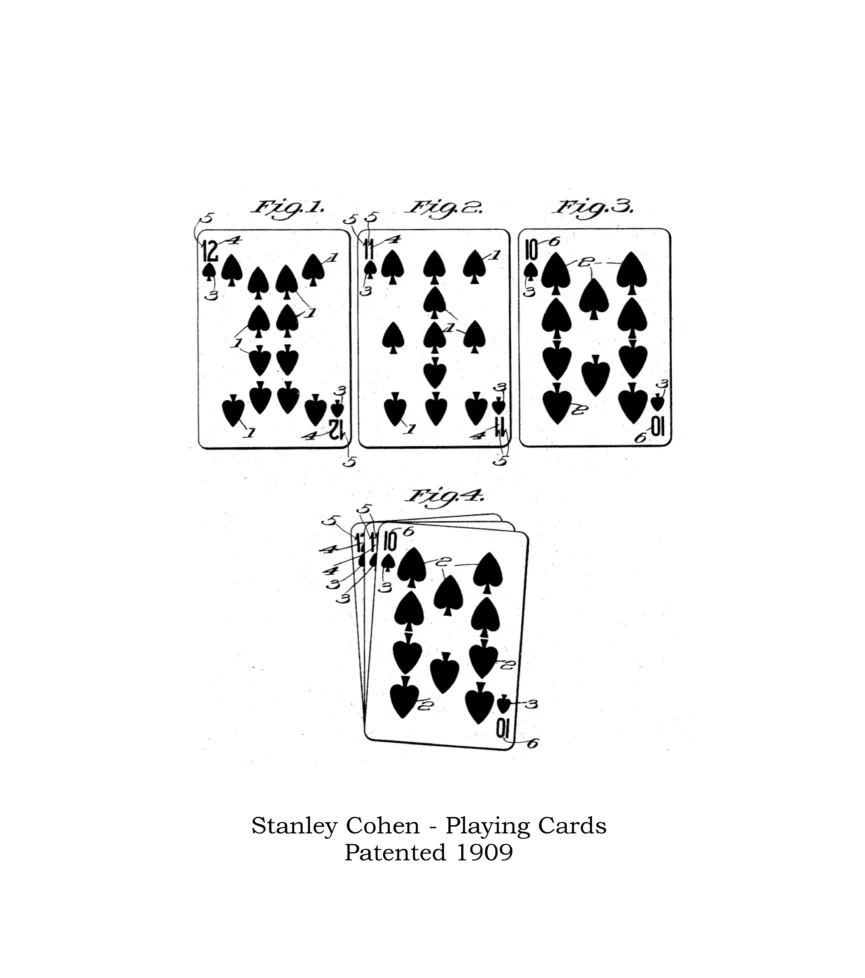
Developing a new card game can require a surprising amount of work. A creator may spend months developing the rules, balancing the game, designing cards and artwork, writing instructions, testing different versions, and building a name around the finished product.
Practicing here in Las Vegas, I have dealt with this issue more times than I can count. I have worked with with prospective clients and with clients who have already invested substantial time and money into developing a game. They often come to me convinced that the game itself must qualify for patent protection because the rules are new, useful, and unlike anything currently on the market.
Unfortunately, that is not how patent law works.
A game can be genuinely original and commercially promising without qualifying for patent protection. The problem usually arises when the innovation lies primarily in the rules themselves. Patent law, copyright law, and trademark law protect different things, and no single form of intellectual property necessarily protects an entire game.
The better approach is to identify the different creative and commercial elements of the game and determine which form of intellectual property law best protects each one.
Can You Patent the Rules of a Card Game?
This is where I repeatedly have to deliver news that game creators do not want to hear.
Patent protection creates a significant challenge when an invention primarily consists of rules for playing a game. A creator may have developed an entirely new wagering system, scoring method, sequence of play, or combination of familiar game elements. That creativity alone does not necessarily make the rules patent eligible.
In In re Smith, the United States Court of Appeals for the Federal Circuit considered patent claims directed to rules for conducting a wagering card game. The court found that the claimed rules constituted an abstract idea. Conventional activities such as shuffling and dealing an ordinary deck of cards did not add enough to make the claims patent eligible under Section 101 of the Patent Act.
That decision explains the problem I encounter with many card-game inventions. Adding conventional cards, chips, tables, dice, or other ordinary gaming equipment to a new set of rules generally does not transform those rules into patentable technology.
The decision does not mean that every invention involving a game automatically falls outside patent protection. The Federal Circuit specifically noted that gaming inventions involving something more than conventional rules and ordinary playing cards might present a different question.
New gaming hardware, specialized card structures, electronic systems, security technology, or other technological improvements may still support patent protection.
For a traditional card game whose principal innovation consists of new rules, however, Section 101 creates a substantial hurdle. Before spending thousands of dollars pursuing a patent application, a game creator should understand that distinction.
Copyright Law Can Help
Copyright law provides a different type of protection.
The United States Copyright Office makes clear that copyright does not protect the idea for a game or the methods for playing it. A creator therefore cannot claim a copyright over the basic concept of a game or prevent everyone else from using the same rules merely by writing those rules down.
For example, copyright generally will not give someone the exclusive right to require a player to draw two cards, place a particular wager, move a token a certain number of spaces, or receive a payout when a particular combination occurs. Those rules describe procedures or methods of play.
Copyright protects original expression rather than the underlying method.
Copyright Can Protect the Rulebook
Although copyright does not protect the rules themselves, it can protect the author’s original expression of those rules.
A detailed rulebook may contain substantial original writing. An author might explain how the game begins, describe different stages of play, provide examples, introduce fictional characters, include illustrations, or discuss strategy.
Another person may have the right to create a game using an unprotected method of play. That does not necessarily give that person the right to copy the original author’s wording, illustrations, diagrams, examples, or other creative expression.
The Copyright Office specifically recognizes that text describing the rules of a game may contain copyrightable authorship.
The distinction matters. Copyright may protect the way an author explains the rules without giving the author a monopoly over the rules themselves.
Copyright Can Protect Game Board and Table Artwork
Many games contain substantial visual creativity.
A board or casino table layout may include original illustrations, decorative graphics, characters, maps, backgrounds, borders, symbols, or other artistic elements. Packaging may contain additional artwork and graphic design.
Copyright can protect those artistic elements when they contain sufficient original authorship. The Copyright Office specifically identifies graphic art appearing on a game board or game container as an example of material that may qualify for copyright protection.
Copyright does not necessarily extend to functional aspects of the layout. If players need a particular location or arrangement to follow the game’s rules, copyright does not automatically give the creator exclusive rights over that method of organizing the game.
The creator will generally find stronger copyright protection in the original artwork and visual expression than in the underlying system of play.
Playing Cards Can Contain Copyrightable Artwork
The same principle applies to the cards themselves.
Ordinary numbers, familiar suit symbols, and other commonplace material may receive little or no copyright protection. Original illustrations, characters, decorative artwork, backgrounds, and graphic designs present a much stronger case for protection.
This distinction can become particularly important for modern specialty games. Some games develop an entire visual identity around their cards. Players may recognize the artwork almost as readily as they recognize the game’s name.
A competitor might have the right to develop a game using similar unprotected mechanics. That does not necessarily give the competitor the right to reproduce the original artwork used to present those mechanics.
Copyright Registration Strengthens Protection
Copyright arises when an author creates an original work and fixes it in a tangible form. Registration does not initially create the copyright.
Registration nevertheless provides important advantages when an owner needs to enforce those rights.
A game developer who creates a professionally written rulebook, original card artwork, packaging, or game-board graphics should therefore consider copyright registration as part of an overall intellectual property strategy.
Registration can become particularly valuable when the visual presentation or written content represents a substantial part of the game’s commercial value.
Trademark Law Can Protect the Game’s Name
Trademark law protects something different: the identity of the game in the marketplace.
A distinctive game name can function as a trademark when consumers recognize the name as identifying the source of the product. A logo or other branding can perform the same function.
Copyright does not protect the name of a game. Trademark law may.
For a successful game, the trademark can eventually become one of the most valuable intellectual property assets associated with the product. Players may purchase expansions, accessories, electronic versions, tournament products, or later products because they recognize and trust the brand.
Trademark law protects that connection between the product and its source.
Choosing a Strong Game Name Matters
Game developers should think about trademark protection early in the development process.
Fanciful, arbitrary, and suggestive trademarks generally provide stronger protection than names that merely describe the game or how it works. A distinctive name also gives the developer a better opportunity to build a recognizable brand.
Before investing substantially in packaging, websites, advertising, casino demonstrations, manufacturing, or distribution, the developer should investigate whether someone else already uses a confusingly similar trademark.
That search should occur before the developer becomes heavily invested in the name. Searching tools have become easier to use and readily accessible.
Federal Trademark Registration Provides Additional Protection
Trademark rights can arise through use of a mark in commerce. Federal registration provides substantial additional advantages.
Federal registration can provide nationwide notice of the owner’s claim, legal presumptions concerning ownership and the right to use the mark, the ability to use the federal registration symbol, and additional enforcement tools.
A developer who has selected a name but has not yet launched the game may also consider filing an intent-to-use trademark application. That application can allow the developer to begin the federal registration process before actual commercial use begins.
Physical card games and board games commonly fall within International Class 28. Electronic games, downloadable software, entertainment services, publications, and related products may require protection in other classes.
The appropriate filing strategy depends on how the developer plans to market and sell the game.
Logos May Receive Both Copyright and Trademark Protection
A game logo can sometimes receive more than one form of intellectual property protection.
Trademark law may protect the logo because consumers recognize it as identifying the source of the game. Copyright law may separately protect sufficiently original artistic elements contained in the logo.
Simple lettering, familiar symbols, and basic geometric designs may not contain enough original authorship to receive meaningful copyright protection. Those same elements may nevertheless function as trademarks if consumers recognize them as identifying a particular source.
This overlap demonstrates why creators should consider intellectual property protection as a combination of complementary rights rather than simply choosing between patents, copyrights, and trademarks.
A Game Can Have Several Layers of Intellectual Property
A game developer should not abandon intellectual property protection simply because patent law provides little protection for the underlying rules.
Section 101 may create problems for the method of play, while copyright law protects original card and board artwork. Copyright may leave the rules themselves available for others to use while protecting the author’s particular rulebook against copying. The underlying concept may remain open to competitors while a distinctive name and logo develop valuable trademark rights.
Patent protection may also remain available when the game incorporates new technology, specialized hardware, electronic systems, card-reading equipment, security mechanisms, or other technological improvements.
Different forms of intellectual property protect different parts of the product.
Protecting the Parts of a Game That Have Value
Las Vegas continues to generate new casino games, wagering concepts, table games, and entertainment products. Many traditional games will face significant patent hurdles when their principal innovation consists of new rules for playing a game.
That does not mean the creator has nothing to protect.
A professionally developed game may include valuable written content, original artwork, distinctive cards, packaging, a recognizable logo, and a strong brand name. Copyright and trademark law can protect many of those assets even when patent law provides little protection for the underlying method of play.
The better question is not simply whether someone can patent a card game. A game developer should identify which parts of the game create commercial value and use the appropriate form of intellectual property protection for each of them.