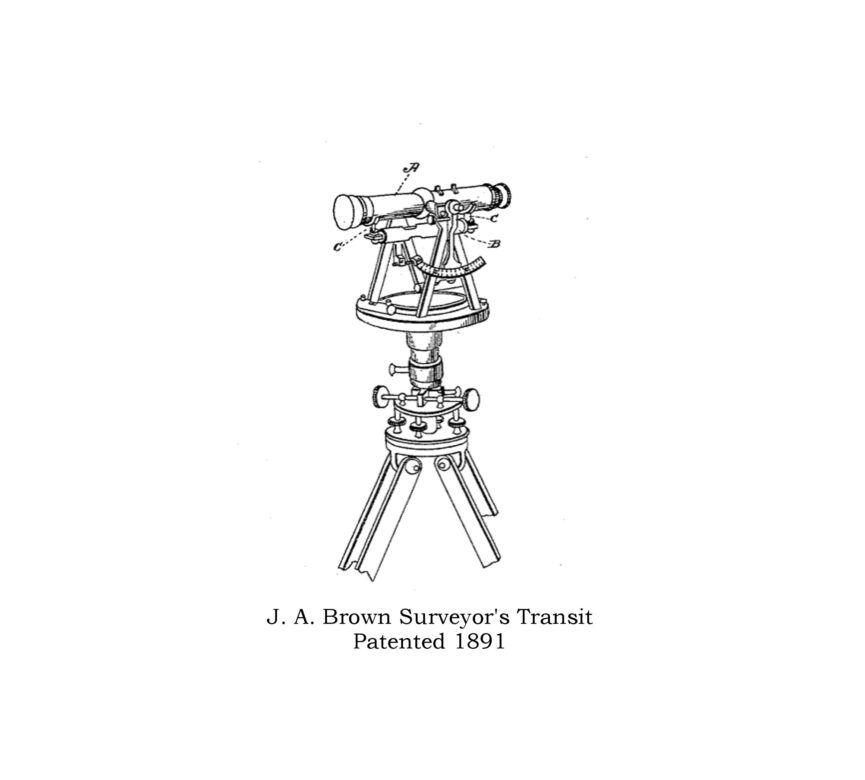
Nevada earned its nickname, the Silver State, because generations of prospectors, miners and settlers knew what it meant to stake a claim. They walked the land, marked boundaries, filed their notices, and documented their property rights with precision. The process was not symbolic. It determined ownership.
The written description requirement under 35 U.S.C. §112(a) works the same way. When you file a patent application, you must stake your claim in the landscape of innovation. You must clearly describe what you invented, show that you possessed it at the time of filing, and define its boundaries with the same clarity a Nevada prospector once used when marking out a mineral deposit. If you fail to describe the territory, you do not own it.
How the Doctrine Took Shape: From Early Law to Modern Decisions
The written description requirement developed slowly through case law. As early as Evans v. Eaton (1822), the Supreme Court stressed that inventors must “particularly specify and point out” what they created. This early emphasis mirrors the territorial mindset of the era — ownership came from clarity, not assumption.
In the modern era, the Court of Appeals for the Federal Circuit refined the doctrine. Vas–Cath Inc. v. Mahurkar (1991) introduced the now-familiar concept of “possession,” holding that the written description must show the inventor actually invented what is claimed. The court required real, concrete disclosure — the patent equivalent of walking the claim and driving stakes into the ground.
The landmark decision in Ariad Pharmaceuticals, Inc. v. Eli Lilly & Co. (2010) cemented the doctrine. The Federal Circuit held that written description is a stand-alone requirement, separate from enablement and best mode, and that functional claiming without structural support fails §112. In other words, you cannot claim the entire mountain if you only described the entrance to the mine.
The Specification: Your Map of the Territory
A patent specification explains what the invention is, how it works, and what variations the inventor contemplated. It functions like the detailed surveys filed during Nevada’s mining boom. Those surveys showed where the vein started, how far it ran, what the boundaries were, and what landmarks marked the claim.
In patent law, the specification plays the same role. It maps the invention in full. It shows depth, contour, and scope. A well-crafted specification does more than describe one preferred version. It explains alternative configurations, optional materials, different sizes, and additional embodiments that still achieve the same inventive purpose.
A shallow description is like filing a mining claim on a hillside without identifying any features. Someone else can tunnel around you and take what you left unclaimed.
The Claims: The Legal Boundaries that Define Ownership
While the specification maps the terrain, the claims define the legal boundaries — the metes and bounds of your invention. Claims tell competitors, courts, and the USPTO exactly where your rights begin and where they end.
Nevada miners learned long ago that clearly marked boundaries prevented land disputes. Similarly, in patent law, claims must stay within the territory the specification supports. If a claim tries to cover subject matter never described, it reaches beyond your rightful property. Courts strike down such claims because they attempt to fence in territory the inventor never actually possessed.
This is why written description and claims must work together. The specification points out the lay of the land; the claims put up the fence.
Possession: What the Law Expects
To show possession, your description must demonstrate that, as of the filing date, you understood and controlled the inventive concept. Courts look for identifiable structure, meaningful examples, and clear support for each element.
Broad functional claiming without detail is like saying, “I own all silver in this region,” without identifying a single vein, ledge, or mineral deposit. The law doesn’t allow it. You must define the boundaries of your idea.
When you describe variations, alternatives, and optional features, you expand your territory. You mark out more land. You prevent others from working a neighboring claim by simply shifting a few feet to the left.
Common Pitfalls: When Inventors Lose Territory
A common error arises when inventors describe only their favorite version of the invention and later try to broaden the claims. If the original specification didn’t mention those broader features, the inventor cannot extend their rights after the fact. Patent law prohibits adding new matter, just as mining law prohibited expanding a claim beyond what was originally staked.
The famous Gentry Gallery v. Berkline decision illustrates this. The inventor described a reclining chair with controls in a specific location but later tried to claim broader configurations. The court rejected those expanded claims because the original description never supported them. He tried to claim more land than he originally marked.
Why Nevada Inventors Need a Thorough Written Description
Nevada thrives on innovation — from advanced manufacturing and clean-energy technologies to software, gaming systems, and consumer products. Whether you’re in Las Vegas, Reno, Henderson, or Sparks, a strong written description is the foundation of a strong patent. It creates certainty. It blocks workarounds. It supports licensing. It stands up in court.
When you give your attorney a thorough invention disclosure, including sketches, prototypes, and alternative embodiments, you empower us to stake the broadest defensible claim. You secure a larger piece of intellectual territory. You protect your idea like Nevada prospectors protected their silver lodes.
Conclusion
The written description requirement exists to ensure that inventors claim only what they truly possessed. It is the intellectual property equivalent of staking a mining claim. If you describe your invention thoroughly, map out its full scope, and define its boundaries with care, you secure a strong, defensible patent grant that protects your innovation from every angle.
In the Silver State, where staking claims shaped history, the lesson still applies: The inventor who marks the territory clearly is the inventor who owns it.