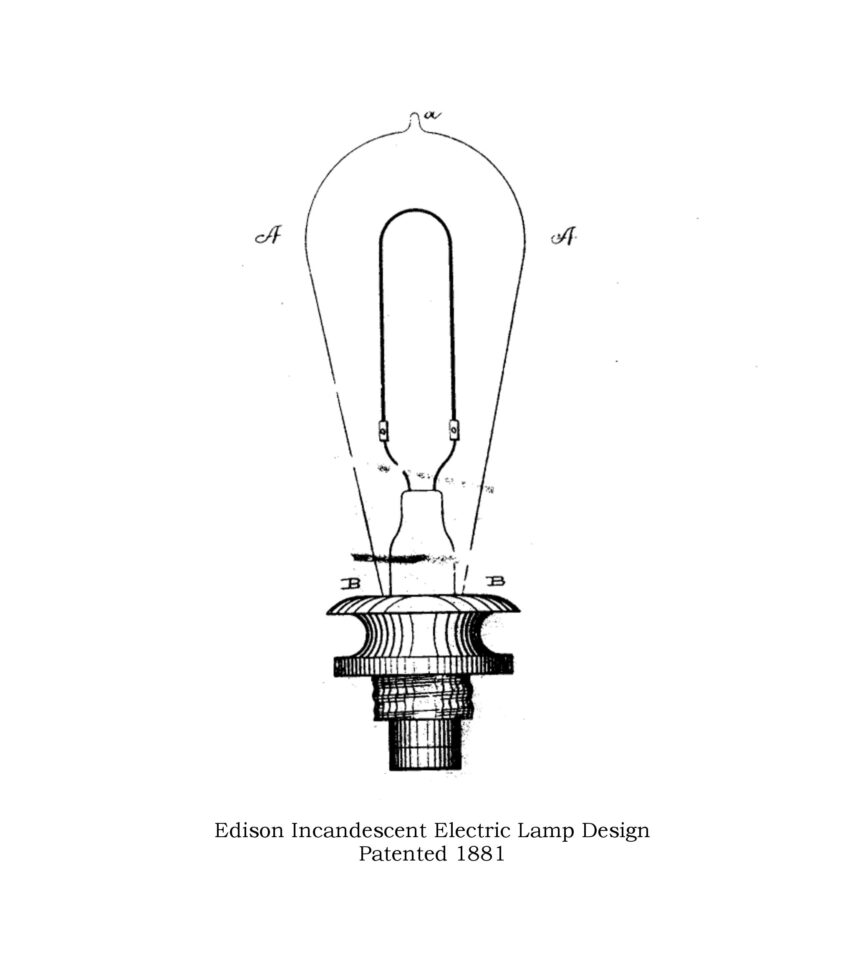
With each passing year, I grow more grateful for the advances in technology that have improved our lives. Thanksgiving gives me an opportunity to pause and appreciate that progress and the people behind it. This year marks 250 years since the United States declared independence from the British Crown. Looking back to 1776 offers a remarkable perspective on how far we have come—and how much of what we enjoy today began with someone finding a better way to do something.
The people who declared independence lived in a world without electric lights, telephones, automobiles, or antibiotics. A letter crossing the Atlantic traveled aboard a masted ship for weeks, maybe months. Keeping food fresh, traveling to see family, and treating an infection presented challenges that are difficult to appreciate from the comfort of our modern world.
Today, many of the technologies that would have astonished those earlier generations barely attract our attention. We turn on a light, adjust the thermostat, and take out a small feast from the refrigerator. We complain when a Zoom call crashes out, even as the technology allows us to see and hear someone thousands of miles away. Familiarity makes it easy to forget what these capabilities represent.
Here in Las Vegas, we see the influence of invention in the bright lights of the Strip and the sophisticated sound systems and visual effects that make extraordinary entertainment possible. Nevada’s technological history also extends to atomic testing and countless improvements in mining technology. The very different chapters in our state’s history remind us how profoundly scientific discovery and invention have shaped the place we call home. They also give us a local connection to the larger story of technological change over the past 250 years.
Thanksgiving brings those advances together in a particularly meaningful way. Refrigeration helps preserve the food we prepare. Modern stoves and thermostats help us cook it. Cars and airplanes bring families together across distances that once made a visit a major undertaking. When someone cannot join us, a phone or computer can still give that person a place in the conversation.
Medical progress gives us even more to appreciate. Vaccines, antibiotics, diagnostic imaging, and advances in surgery have changed what physicians can prevent, detect, and treat. For a family able to spend another holiday with someone who has benefited from that care, technological progress has a very personal meaning.
All these capabilities reflect generations of hard work. A modern medical instrument depends on discoveries in several fields, as well as the engineering needed to turn those discoveries into something reliable. A refrigerator represents improvements in cooling systems, materials, manufacturing, and controls. Even a familiar household product carries a history of problems someone took the time to solve.
The United States has made substantial contributions to that history, alongside inventors and researchers throughout the world. People have carried knowledge across borders, built on earlier discoveries, and adapted existing tools to new purposes. The benefits we enjoy today reflect that accumulated effort.
Encouraging invention also has a place in our constitutional history. Upon ratification, our new Constitution authorized Congress to secure exclusive rights to inventors for limited times, with the stated purpose of promoting the “Progress of Science and useful Arts.” Those words connect recognition of an inventor’s work with a broader public benefit–the advancement of useful knowledge and technology.
That connection matters to independent inventors today. A person working on a better tool, a medical device, or an improvement to a familiar product is participating in that continuing effort. The problem may arise on a job site, in a workshop, or while caring for a family member. Recognizing the problem and deciding to work on it can be the beginning of something useful.
Some improvements attract widespread attention. Others make a particular task safer, reduce waste, or help someone live more independently. All those contributions deserve appreciation. The value of an invention can be very clear to the person whose work becomes easier or whose daily life improves because it exists.
Looking at 250 years of innovation can make technological progress appear to follow a straightforward path. Yet that view leaves out the countless unsuccessful experiments, difficult revisions, and years spent refining and making an invention more practical. We benefit from the persistence of people who kept working through endless problems and overwhelming odds.
This Thanksgiving, I am grateful for the people whose work helps us all stay healthy, spend time with our loved ones, and remain connected across great distances. I am also grateful for the independent inventors working on the next improvement. Their work gives us reason to look forward to what the coming years may bring.
Happy Thanksgiving from The Thornton Firm.